Agenda Editions is Agenda’s own publishing company which produces small, beautifully printed, limited editions of an individual’s poems.
To purchase any of the Agenda Editions listed below, please visit the Agenda Editions online bookshop to place your order or email: [email protected]
If Grief were a Bird – Elizabeth Barton

‘Elizabeth Barton’s poems are like the linnet’s wings she evokes in the opening piece of this stunning collection – delicate but capable of taking flight. She finds striking beauty in ordinary moments and records joy and sadness with great compassion. These poems are small inventories of what we treasure – Barton summons us from our shadow lives and gives us words to soar.’
Tamar Yoseloff‘Elizabeth Barton has a unique voice – rooted in her love for the land, the earth, and also for her family and the father she has lost. The poems in this pamphlet are carefully crafted, and the beauty of the language, and the rare image or turn of phrase, make a music very like a song ‘rich as honeycomb’, or like a bird that is singing of the world – a world of searing grief and loss and pain, but also of ‘jasmine flowers’ and a sublime ‘iridescence’. It is through nature that she has found the words to articulate her grief over her father’s death, and to make sorrow a way of singing and an art. Barton sings from the whole heart.’
A A Marcoff
Hand in Hand – Patricia McCarthy

Published July 2022 by Agenda Editions/London Magazine Editions.
“Patricia McCarthy has performed a wonderful conjuring trick in this memorable sequence. The integral elements are themselves things of beauty, discrete poems to stop and admire, the product of hard-won technical virtuosity. Simultaneously they sustain and deepen the narrative momentum and reach; the warp and weft of the poem shows again and again a superb control of image, music and pattern. McCarthy’s use of the ‘mythic method’ shows her as a latterday modernist; from first to last, we sense her homage to Eliot and Joyce. Readers will all come to the story of Tristan and Iseult with their own preconceptions; McCarthy honours and assimilates earlier versions, sources and analogues. At the same time she expands our psychological insights into characters united and trapped by the knot of passion. Her emotional insight makes the agonies and joys of plighted love (and attendant loss and bereavement) both credible and thrilling. The characters are vividly placed but transcend their settings to reach out to the reader. Hand in Hand is a miracle of rare design.”
Peter Carpenter“Hand in Hand is a tour de force. McCarthy has dived into the current of one of the West’s most potent legend-myths – with all its psychological entanglements and ancient symbols – and brought to bear to it an enchanting range of voices, folklore images, verbal textures and poetic music. The result is a verbal Gobelin tapestry, where fascinating detail on detail is subsumed into a wonderful whole.”
James Harpur
Bird of Oblivion – David Pollard
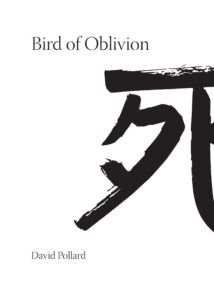
In this succinct, profound collection, David Pollard is writing at the height of his powers. Here his focus is on a loved one’s worsening dementia and he deals with this with sensitive compassion and intense powerful word-music. Published July 2022.
‘The More I read his work, the more I feel that David Pollard is a poet of real substance, a voice which deserves to be better known, more widely read than perhaps he is now’
Glyn Pursgrove, Acumen“Pollard’s new amplitude stretches his linguistic brilliance with a human resonance, confirming his unique voice and arguing – perhaps too quietly – for an essential place in British poetry.”
Simon Jenner
Crow-Black Stones and a Flock of Crows – Peter Weltner

This moving collection – passionate, sensuous, erotic yet spiritual, universal and elemental – breathes with life and even with the life of death. This prolific American poet, a retired Professor, tackles, with the wisdom of experience and of learning, themes of time, memory, age, desire, love, and loss. His painterly images, especially of the sea, trees and the flora and fauna around him rival nature’s. His range is wide, never didactic, and includes composers, visual artists, opera and mythology – all of which are subsumed into his own musical voice which so subtly masters many different forms. Published July 2022.
A Rite of Twilight
At sunset, after a day’s rain, the city’s streets shine
like rusted steel. The sidewalks are ruddy. A lizard,
a copper casting, crawls across a yard. The clouds, wine-
soaked, burn ember-red. Omens, maybe, though hard
to conceive of meaning in them or the intensity
of evening. A jay in a persimmon tree
caws at warblers perched on a fence. When did it begin,
sunset’s grip on life? Winged
seeds drifting, lifted by breezes at day’s end, thin
as paper, flicker like tongues of fire ringed
above a saint’s head. Earth and sky and soul
at twilight. And in the afterglow,
the fading dusk, the sun smolders like a dying coal
in a hearth spilling its last light bright
as the brightest blood, late shed for its beauty.
Five Psalms – Peter McDonald
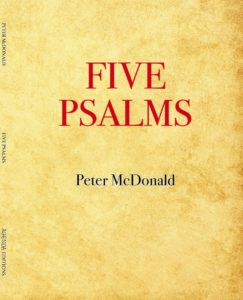
Peter McDonald has been a Tutor at Christ Church, Oxford since 1999. His work includes Collected Poems (Carcanet, 2012), The Homeric Hymns (Fyfield Books, 2016) and The Gifts of Fortune (Carcanet, 2020).
FIVE PSALMS is an ambitious act of translation from The Book of Psalms. It combines close metrical versions of Psalms 98, 25, 94, 8, and 114 with free paraphrases that relate the poetry to more personal themes. Publication date: 18th February 2021.
“Fuelled by rage and sorrow, this is an astonishing outburst. From the greatest hymnbook of them all Peter McDonald takes five Psalms and reshapes them with metrical resource and virtuosic rhyming. The second part of each section has a more improvisatory feel, and consists of variations on the theme of the originating Psalm. Written under great pressure, even the free-verse passages are focused and intense. This poet’s burden is ‘the way of truth’ and the need to vanquish ‘those who poison and destroy / in darkness’. His utterance ranges from ferocity to hush. His compulsion is always towards transcendence. This sequence is not like anything else. Five Psalms is profound and beautiful and frightening. It is a masterwork.”
Michael Longley
Whose hand would you like to hold.. – Patricia McCarthy
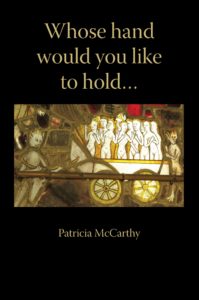
Published October 2020 by Agenda Editions.
Featured on the High Window website
Evening Primroses – Nancy Sandars

Evening Primroses is a posthumous collection of poems, published by Agenda, with a preface by John Fuller.
It contains previously unpublished examples of her work from six decades, all characteristic of her sharp cultural and historical awareness, of her observant celebration of nature, and (in some moving last poems) of loneliness and loss.
Nancy Sandars: Biography
The archaeologist and poet Nancy Sandars was born on 29 June 1914 at the Manor House, Little Tew, Oxfordshire, where she lived all her life. She was largely privately educated and in her youth travelled widely in Europe, learning German, French, Italian and Spanish. She became interested in archaeology before the war (having joined Kathleen Kenyon’s dig on the Wrekin in 1939) but was soon caught up in the hostilities. She first served in the Motor Transport Corps as a dispatch rider, but in 1943 joined the WRNS, and worked in intelligence, first at Bletchley Park and then in a series of coastal postings in enemy reconnaissance. After the war she studied under Professor Gordon Childe at the Institute of Archaeology, University of London, and for a B. Litt. Degree from St Hugh’s College, Oxford, before publishing her first book, Bronze Age Cultures in France with Cambridge University Press in 1957.
She travelled widely in Eastern Europe and in the Middle East, with studentships from Oxford University and the University of Liverpool, and published her best-selling translations of Mesopotamian poetry for Penguin Books. Her major work, Prehistoric Art in Europe, in the Pelican History of Art series, was published in 1968, and the revised version was also published by Yale University Press in 1995. She was a Fellow of the Society of Antiquaries of London, and a Corresponding Member of the German Archaeological Institute, and was elected a Fellow of the British Academy in 1984. She was a prolific poet and playwright from her early twenties, but did not publish a collection until the age of 87. Towards the end of her life she supervised a digitisation of her life and work. She died at Little Tew on 20 November 2015.
By the Same Author
Bronze Age Cultures in France (Cambridge University Press, 1957)
The Epic of Gilgamesh (translation, Penguin 1960, revised 1972)
Prehistoric Art in Europe (Pelican, 1968, revised 1985)
Poems of Heaven and Hell from Ancient Mesopotamia (translation, Penguin, 1971)
Idling On (poems, Sycamore Press Broadsheet 18, 1972)
The Sea Peoples: Warriors of the Ancient Mediterranean (Thames and Hudson, 1978)
Grandmother’s Steps (poems, Agenda Editions, 2001)
Letting Go – Josephine Balmer
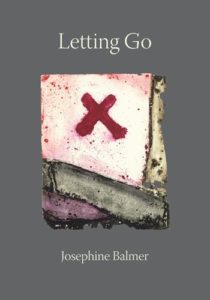
Josephine Balmer’s delicate yet powerful sequence traces the devastating impact of her mother’s sudden death. Employing Balmer’s characteristic blend of original poetry and classical versioning, Letting Go: Thirty Mourning Sonnets and two poems draws on a variety of sources and inspirations, from Virgil’s Georgics to Google’s Street View. Heartbreaking but ultimately healing, these poems re-enact the crushing pain – and final acceptance – of a bereavement that ‘feels like too little love. Or too much’. Published July 2017.
Josephine Balmer: Biography
Josephine Balmer’s latest collections include The Paths of Survival (Shearsman, 2017), The Word for Sorrow (Salt, 2013) and Chasing Catullus: Poems, Translations & Transgressions (Bloodaxe, 2004). She has also translated Sappho, Classical Women Poets and Catullus, all for Bloodaxe. Her study of classical translation and poetic versioning, Piecing Together The Fragments, was published by Oxford University Press in 2013. Single poems and translations have appeared in many publications including Agenda, Arion, Horizon, The Independent, The Independent on Sunday, Long Poem Magazine, Modern Poetry in Translation, New Statesman, The Observer and The Wolf, and been anthologised widely as well as broadcast on many radio and TV programmes. She writes on poetry and translation for several newspapers and journals including TLS, New Statesman and The Times, for which she sets the daily Word Watch and weekly Literary Quiz. She studied Classics and Ancient History at University College, London, and was awarded a PhD in Literature and Creative Writing by the University of East Anglia. She lives on the edge of the Ashdown Forest, East Sussex, with her husband, the journalist Paul Dunn, and one dog.
New Statesman Review of Josephine Balmer’s Letting Go & Paths of Survival
Praise for Josephine Balmer
On The Word for Sorrow:
‘Brilliant and original… Balmer’s meditations on the possibilities of connection and difference across the centuries [offer] the hope of genuine understanding and the peace of reconciliation’
Margaret Reynolds, The Times
‘Balmer has created a genre of her own: a kind of historical docupoem, a collage of voices in which authenticity is as important as art’
Kate Bingham, Poetry London
Josephine Balmer’s poetry moves beautifully…and indeed bravely’
George Szirtes
‘These poems are proof of how the ancient myths and texts still live and work…Local, personal (in the best way) and connected…commonly human, reaching far back.’
David Constantine
On Chasing Catullus:
‘Wry, lyrical, invariably learned…a gripping read’
Edith Hall, TLS
‘Alchemy achieved in poetry’
Paschalis Nikolaou, The London Magazine
‘A moving and powerful sequence’
Glyn Pursglove, Acumen
On Catullus: Poems of Love and Hate:
‘Superb’
Christina Patterson, The Independent
On Sappho: Poems and Fragments:
‘Balmer...modestly fulfils Boris Pasternak’s demand that “ideally translation too will be a work of art; sharing a common text, it will stand alongside the original, unrepeatable in its own right”’
Christopher Logue, Literary Review
Three Symphonies – Tony Conran
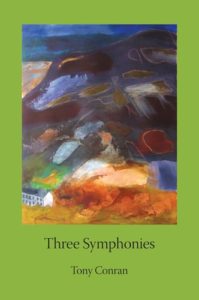
In his final group of symphonies, Conran explores life, love, theology, creation, creativity and even historical themes using a wide range of poetic and imaginative techniques. The three symphonies complement and contrast with each other and show the poet still at the height of his imaginative power. The imagery draws on science, religion, family life (in The Magi), work (in Fabrics), the poetic and creative experience (in Everworlds); displaying humour, wonder and compassion for the human predicament.
In his perceptive introduction to the poetry, Jeremy Hooker writes: ‘Three Symphonies draws on their maker’s life-story, but as part of the story of life itself, and with an objectivity that subsumes personal emotion in a larger rendering of human experience in relation to the natural and divine creation. What Conran enacts in these poems is a sacred drama. Published June 2016.
Tony Conran: biography
Tony Conran (1931-2013) was an ambitious and accomplished poet, a daring Modernist, in the line of Pound, Bunting, MacDiarmid and David Jones. An outstanding translator of Welsh language poetry, he built on the radically different relationship between the poet and society he found there to create a distinctive, powerful and humane poetic vision. His many volumes of poetry include Blodeuwedd (Poetry Wales Press 1988), Castles (Gomer 1993) and What Brings You Here So Late (Gwasg Carreg Gwalch 2008). He was also a perceptive and often challenging critic, a dramatist and an influential teacher at the University of Bangor in North Wales.
Born in India, Tony Conran was brought up in Liverpool and Colwyn Bay, worked for a short time in Chelmsford before settling in Bangor. He was deeply interested in music – classical and folk traditions; science – including botany, chemistry and geology; theology and political theory. He translated Dante and Latin poets as well as Welsh poetry.
Other publications include Welsh Verse(Seren 1986), Peacemakers (Gomer 1997, translations of the poetry of Waldo Williams), Frontiers in Anglo Welsh Poetry (University of Wales Press 1997, critical essays).
Visit Agenda Audio Recordings to listen to extracts from: ‘Tony Conran Remembered’ performed at Another Festival, Caernarfon July 2015
Letters to Akhmatova – Patricia McCarthy
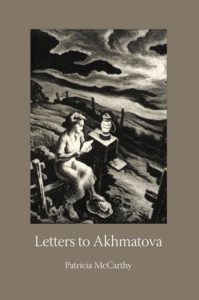
‘Such moving, insightful lyrics in these lovely Letters to Akhmatova…. and what an ear Patricia McCarthy has for melody!’
Elaine Feinstein, Akhmatova’s translator and biographer
‘This is a work to relish. The details and understanding of the details are incredible, ringing true and alive in Patricia McCarthy’s descriptions, the format is easy and leads on and on with a real inevitability of telling and rhythm’. The pathos is there but it is encompassed in the truth of the details and is the first (of so many!) approaches to Akhmatova that rings of real personal commitment and love rather than an exercise in worship or a clinging to myth. I really think this is a truly valuable publication. My admiration!’
John F Deane, founder of Poetry Ireland and of The Dedalus Press
‘I have followed Patricia McCarthy’s work with great interest since the seventies. She is one of those rare poets that, like a good wine, improves with age. I think this is her best book so far.’
Peter Dale
‘Taking her epigraph from an old Egyptian saying, “To speak of the dead is to make them live once again”, Patricia McCarthy’s Letters to Akhmatova addresses a tragedy the Western imagination still finds difficult to grasp. In ten poems and postscripts – the letters of the title – McCarthy communes with Akhmatova’s sprit and life, from the opening poem suggesting that ‘your spells/white-witching, could put the devil to rout’. This may seem like wishful-thinking, but as the bureaucrats of the Soviet killing-machine are gradually reduced to names on forgotten index cards, it is Requiem and Poem without a Hero that are written into our collective memory. In Rodin’s Shadow, McCarthy captured a familiar European artistic milieu. Letters to Akhmatova attempts something even more ambitious, a moving and urgently challenging recreation of an imagination defying the horrors of history.’
William Bedford
Finis-terre – David Pollard

I am awe-struck by your long poem. It has such startling, accurate images, such lovely rhythms in its speech patterns, and repetitive echoes of images which unify the whole work (rather akin to the Four Quartets). Internalised images, classical allusions used to great effect, clever play on words, painterly colour – all offer so many layers and levels of meaning.
W S Milne
David Pollard displays an uncanny ability to let words collide so as to interrupt their sense, only then to renew their saying power somewhere beyond the limit of fixed speech. His artistry turns words—in his own words—into ‘glancing letters of illumination craning into the darkness’.
John Sallis
On Self-Portraits:
This is a remarkable and illuminating collection. It has already rewarded more than one reading and I am sure it will richly reward many more.
Glyn Pursglove, AcumenEach of these poems stand alone as a finely constructed piece in its own right, but collectively Pollard’s book builds and offers great insight into some of the most influential artists throughout history. The depth of the verse is delightful, providing fresh perspectives on art and poetry. Self-Portraits is highly recommended read.
Mhairi Anton, DURA
On Risk of Skin:
There are strong rhythmic echoes of the natural world, Keatsean influences throughout the poems… A difficult and beautiful collection. Any one of these poems merits the attention of at least six hundred words.
Beth McDonough, DURA
On Bedbound:
This is a nuanced, sparse and intense testimony from the bedside of a life coming to an end. Pared of all punctuation, shifting subtly from one impression or memory to another, the poems repay, and even demand, a number of re-readings.
Alasdair Paterson, Stride
Storysongs/Chantefables – French poems by Robert Desnos, English versions by Timothy Adès, illustrations by Cat Zaza

Hardback, full colour covers and illustrations. Published Dec 2014.
A charming bilingual book for children and adults to sing to any tune. The brilliant French poet and surrealist Robert Desnos, 1900-45, wrote these thirty ‘Storysongs’ or ‘Chantefables’ in 1943, shortly before he was deported as a Resistant. They were quickly published, but he never saw them in print
These little whimsies of the animal world have delighted generations of French children. Now at last they have been skilfully put into English by the translator-poet, Timothy Adès. This book is bilingual and is adorned with superb illustrations by the award-winning graphic artist Cat Zaza (Caterina Zandonella).
Last Man Standing – Stuart Medland

Stuart Medland: Biography
A primary school teacher in Norfolk for much of his life, Stuart Medland has always written for children and two collections of poems, Pine Cone & Harvest Mouse, published by Lark’s Press, are from these years.
Much of Stuart’s writing results from his passion for natural history and a forthcoming book, Rings in the Shingle, published by Brambleby Books, is a poetic celebration of the wildlife of the North Norfolk Coast inspired by his own photographic encounters. Ouzel on the Honister, a collection of poems culled from his many visits to the Lake District where he has a small cottage, is currently in preparation with Original Plus.
He is a regular contributor to Agenda and has had other individual poems published in Poetry Cornwall and Obsessed with Pipework.
Stuart has a grown-up son, Dan, and a daughter, Col, and has strong family connections with the West Country. He lives with his long-time partner, Beth, in the Norfolk village of Hindringham.
Last Man Standing is Stuart’s first major collection.
This elegiac poetry collection is haunting, harrowing and uplifting. The personal subject matter expands beyond itself into the universal. Medland’s voice is gutsy, honed and he brings back to life his beloved father in this compelling sequence. He bravely exposes a way of dealing with the shock of a cancer diagnosis and proves the human spirit can shine through in the most difficult of times. The vignettes later in the book capturing an England that has almost vanished reminiscent of Larkin.
W S Milne
Horses Between Our Legs – Patricia McCarthy

Patricia McCarthy’s National Prize winning poem, ‘Clothes that escaped the Great War’ follows on from the wonderful poems written by poets like Owen and Sassoon about their war experience, to show the grief of the women who were left behind.
Vicki Feaver, Poetry Review
This is a terrific collection. Patricia McCarthy is an irresistible teller of unforgettable stories, of the ‘buckling cart’ carrying ‘clothes that escaped the Great War’, of the haunting relics of a requisitioned horse, ‘your hairs preserved in silent dandy brushes’. Her skilful poems recall, in urgent rhythms, the lost and brave, the galloping women of the Nursing Yeomanry, who ‘sat tall’, the ‘Munitionettes’ in ‘toxic fumes’: ‘Lilian, Mabel, Elsie, Pearl’.
Alison Brackenbury
Patricia McCarthy’s impressive new collection excavates fascinating new perspectives on the Great War. Whether writing about her own family history or well-known figures, her deft and delicate verse achieves the admirable task of rendering the personal universal, as well as offering a new sense of intimacy to wider historical conflicts. Sweeping through it all are the poet’s beloved horses – heartbreakingly requisitioned for active service in the war, as McCarthy fashions eloquent and poignant memorials to ‘each hoof, bone, sinew’. Above all, here are poems which achieve the rare distinction of standing both inside and outside time, as McCarthy observes of Franz Marc’s Blue Horse paintings, ‘in a future already their past’.
Josephine Balmer
The Echoing Coastline – Byron Beynon

The Echoing Coastline is Byron Beynon’s seventh eclectic and engaging collection. The changing nuances of the bond between humankind and the natural world form the basis of these lyrical poems which sing in the ear long after they have been read. Thoughtful and observant, humane and cosmopolitan, they are concerned with Wales but look beyond Wales to a wider world, transforming the particular to the universal.
Byron Beynon: Biography
Byron Beynon was born in Swansea and brought up in Carmarthenshire. He has lived and worked in London, Cardiff, Norway, France and Australia. He has worked as a tutor at Swansea University where he has devised, introduced and taught several modules including “The Growth of Anglo Welsh Literature”; “The Pity of War”; “Landscape and Poetry”’, “Home from Home for Thomases”; “The Life and Poetry of Idris Davies”; and “In Two Fields”. He has also been involved in teaching BA Honours degree courses as well as taking Creative Writing workshops at the Dylan Thomas Centre.
He has read his work at a number of venues in Wales; also at the Edinburgh Fringe Festival, the Hay Festival, Cork and the Swedenborg Hall in Bloomsbury, London. His work won an award in the Scottish International Open Poetry Competition and a sequence of his poems, inspired by the work of Vincent Van Gogh, appeared in a Painters and Poets exhibition in Harrow. His work has appeared in numerous publications in the UK, the US and elsewhere and his work has been widely anthologised.
Mexico – Gary Allen
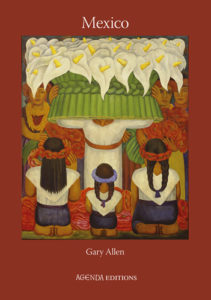
Mexico is a powerful, substantial new collection from Northern Irish poet, Gary Allen, described by Sebastian Barker as ‘one of the more urgent and accurate writers now writing. Mexico, the title, is also a theme – another country, another continent of the mind – that runs like a vein of gold through the collection. It provides a link between many of the poems, suggesting that, although we are alive in the actual moment, we also occupy, mentally, another plane of suffering and despair. From Ireland, across Europe, and farther afield, ‘Mexico’ explores, defines, and understands the loss and pain in each of us. As poet Medbh McGuckian says: ‘Unusual in their sensitivity to the particular vulnerability of women, these poems hover on the edge of despair, but also offer a valuable and much needed insight into the thwarted lives of the poor.’ Martin Mooney also praises the poems in this new collection which are ‘electrified when you least expect it by visceral epiphanies of love, sex, and death – like human memory itself. He summons up the textures of language and experience with impressive fluency.’
Gary Allen: Biography
Gary Allen was born in Ballymena, Nr.Ireland. He has travelled and worked throughout Europe, settling in Holland for some years, before returning home. He is an award-winning poet, with eleven published collections, including, ‘Languages,’ Flambard Press, 2002, ‘Iscariot’s Dream,’ Agenda Editions, 2008, and, ‘Ha, Ha,’ Lagan Press, 2011. He has been widely published in literary magazines throughout Ireland, UK, mainland Europe, U.S.A., Canada, Australia, New Zealand. A selection of his poems was published in the anthology, ‘The New North,’ Wake Forest University Press, North Carolina, and in the UK by Salt Publishing. He has also published a novel, ‘Cillin,’ Black Mountain Press, 2005, and a collection of short stories, ‘Introductions,’ Lagan Press, 2005.
Rodin’s Shadow – Patricia McCarthy

Published by Agenda Editions / Clutag Press October 2012.
‘Rodin’s Shadow is a tour de force with its impressive energy, and the almost uncanny smell of the real that it gives off. And these women are real, that’s for sure. I love the way the sections feed off each other and there’s a powerful sense of accrual. There are changes in pace, changes in tempo, twists in diction, all of which ensure that the register is up, the momentum brightening; they never threaten the unity of the whole piece, however, and this makes for a page-turner. A highly ambitious, highly original and achieved book, full of passionate endeavour’…
Tim Liardet
‘This collection is truly moving. The poems are energetic, exciting, demanding and rewarding. Patricia McCarthy is doing something unique here, using persona and art history to great effect. There is an energy to the language, and a half-wild experimentation that is uplifting and yet controlled. The shifting between rhyme and free verse is also exact and exacting. There is a fine labour manifest throughout and I find the whole a rich achievement’…
John F. Deane
‘I am struck by the poignancy of this collection and particularly like the sense of place in many of the poems which pull off the rare trick of being deeply personal yet, through Patricia McCarthy’s deft poetic skill – the ethereal imagery, the subtle use of rhyme and line foregrounding – become at the same time universal. This collection is a tour de force, so assured poetically and dramatically. Sensual, atmospheric, engaging, highly moving at the end, with a wonderful sense of narrative drive, the work is of a consistently high quality’…
Josephine Balmer
‘Hats off to Rodin’s Shadow. It is excellent: intense, oneiric, erotic, very poetic, very passionate, and deeply knowledgeable about its characters and background. An exhausting but thoroughly enjoyable exploration of the psychic territory of those brilliant, destroyed women. There is so much behind the writing, and there isn’t a single dud poem here’…
Tony Roberts
‘These poems take Camille Claudel, Gwen John and Rose Beuret as starting points and muses, spinning out from their stories and emotions beautiful, lyrical poems, sometimes in an elegiac tone, sometimes even flooded with tragedy and regret, but also with a visceral, muscular hold on everyday reality, physical, outspoken and sustained through Patricia McCarthy’s inimitable, elegant style and polish’…
Sue Roe
Omar Sabbagh – Waxed Mahogany

‘Sabbagh is a rare and gifted poet. He brings enormous pressure to bear on his themes – love, existential meaning, the rage against darkness, an identity finely tuned to both Beirut and the West – marshalling philosophy and literary allusion with intelligence and elegance so that the reader is immersed in his distinctive world in which ‘…sense has two meanings: / To make you see and to make you see.’ (After Conrad’s Preface…). Waxed Mahogany has the hallmarks of his previous two collections – an emotional intensity and vivid honesty in constant dialogue with the metaphysical and analytical – but with an increasingly assured voice and daring range; an extraordinary and exciting poet.’
Dr Jan Fortune, Editor, Cinnamon Press & Envoi
‘In Waxed Mahoghany you will find poems written by an audacious young poet that cover the topics most young poets write on: parents, elegies, lust and longing, mortality; but unlike many published today, you will not find ordinary language in any of them. Perhaps it comes from Sabbagh’s dual identity as Arab and Englishman, but one hears echoes of Mahmoud Darwish, Nizar Qabbani, Fady Joudah in the poems’ alliterations, bold rhymes, surprising metaphors, richness in noun and verb. Sabbagh writes with a refreshing, muscular formalism to challenge the pallid ‘free verse’ so much in vogue. A winner.’
Norbert Hirschhorn, MD, author of Monastery Of The Moon
An Unscheduled Life – Joseph Horgan (Words) and Brian Whelan (Pictures)

Powerful and coherent….. a singular voice in Irish poetry……things unsaid hovering at the edges of the poems that give them a haunted and disturbing charge. Joseph Horgan’s poems resonate particularly powerfully in the shifting culture of Ireland today with its massive transformation in population and community. In the contemporary reality we need poets who will sing homelessness and rootlessness. We should cherish these voices which bring an aboriginal consciousness to the present moment.
Paula Meehan
I find in Joseph Horgan’s poems the cool detachment and severed strength of the loner; the poems hover at times on the verge of self-mockery. His sense of humour chuckles at his own endlessly active intelligence. Joseph Horgan’s poetry is rich in strong, unusual qualities.
Brendan Kennelly
These poems sting like whiskey and imbibing them it is easy to see why Horgan was garlanded with 2004’s Patrick Kavanagh Award.
Billy Ramsell, The Stinging Fly
Brian Whelan, this astonishing artist, is drawn to themes of the utmost profundity and yet treats them with a whimsical originality that is surprisingly affecting. This is very strong art: not for aesthetic wimps.
Sister Wendy Beckett, Art historian and critic
‘Brian – keep the brush in your hand!’
Seamus Heaney
Caroline Clark – Saying Yes In Russian
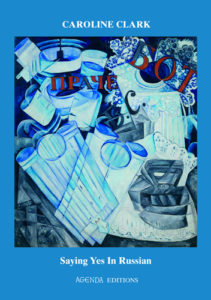
‘Saying Yes in Russian’, a powerful, very visual first collection, is the result of the author’s experience of first studying and then living the Russian language. First she steps away into the otherness of that language, then she steps back in the English language, making new discoveries there, involving the reader with her gently-nudging imperatives. Sometimes lighter in tone, sometimes darker, the richness of her experiences living in Moscow are conveyed. But she moves to other places too, giving the reader a ‘Siesta’, and in the second part ‘Done, in Gold’, where things become more personal in tone: ‘look inside / what will you find?’
‘At Yasnaya Polyana’
Come to a rafter
within the stable’s cool,
two silk-sooted swallows
above a horse at rest.
Who knows such tail-tipped balance
unthought, untrained?
Lástochka, lástochka,
loved first then named.
In this compelling first collection, Caroline Clark plays with languages and with language itself. Her vision is pure and touched with the numinous. Her poems, delicate yet strong, at times impressionistic, catch different lights, essences, tastes and colours – all laid on carefully with a palette knife. Through time and place she leads the reader to the centre of things in a sure, promising voice totally her own.
W.S. Milne
Jean Cassou’s The Madness of Amadis and other poems, translated by Timothy Adès

Bilingual edition: French and English on facing pages.
Jean Cassou, a war time Resistance leader in France, is still somewhat under-appreciated. These intriguing poems represent the body of Cassou’s work, following his famous 33 Sonnets of the Resistance (also translated by Timothy Adès), composed and memorised while Cassou was in prison, forbidden any writing materials.
‘Without strain, Adès creates a perfect mirror for Cassou’s language’…
‘He has done the literate British a huge service’…
‘Cassou’s shade must be glowing’…
‘Ades’ sensitivity xrays the heart of every poem’.
Harry Guest
A Woman Called Rose and other poems – Ángel Crespo. Translated by Arthur Terry
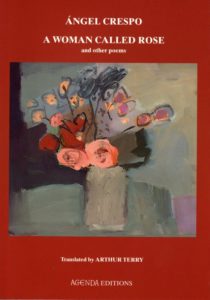
Published July 2011: Spanish poems translated by Arthur Terry who, just before he died, sent a hand-written letter to William Cookson, expressing a strong wish for Agenda Editions to bring this collection out. This has at last been made possible by a generous grant from the estate of the late Elizabeth Robertson, a lover of poetry.
Arthur Terry was part of the Belfast Writing Group which included such well-known poets as Seamus Heaney, Philip Hobsbaum, Michael Longley, James Simmons and Derek Mahon.
Zarathustra – Nicholas Jagger

This long poem is a response to Nietzsche’s Also sprach Zarathustra, rendering in strong and urgent language Nietzsche’s call to a journey away from accepted norms and towards true self-realisation. By turns lyrical and acerbic, and deploying many different voices, the poem offers an imaginative engagement with the challenges posed by Nietzsche’s figure of Zarathustra. The cover illustration and the drawings placed throughout the book come from a complementary body of painting and sculpture in which the poet explores the nature of masks and effigies.
Iscariot’s Dream – Gary Allen

This poignant, multi-layered collection – particularly relevant for our day in its treatment of treachery, and its detailed, graphic rendering of violence as something revolting, not to be mythologised – is the fourth collection by Gary Allen. It is ‘thronged with the undead’, living ghosts from classical mythology, from the Bible, and from the more recent ‘Troubles’ in Northern Ireland. Gary Allen, who was born in Ballymena, Co. Antrim in Northern Ireland, uses his childhood memories to give a gripping reality to this book. He has published three very well-received collections of poetry, the last of which, North of Nowhere, came from Lagan Press in 2006. He has also published a novel, Cillin (Black Mountain, 2005) and a collection of short stories, Introductions (Lagan Press, 2007).
‘A Courageous and stunning work’…
‘Six poems in, the reader is wrenched awake, and to the realisation: something very brave is being done’…
Ailbhe Darcy in the monthly arts supplement of The Newsletter
The Book of Hours by Rainer Maria Rilke, translated by Christine McNeill and Patricia McCarthy
A fresh translation/version of this masterwork by Rilke particularly relevant to our present day: a fine entrance to the rest of his poetry. Rarely available in English.
No Dammed Tears – Jan Farquharson
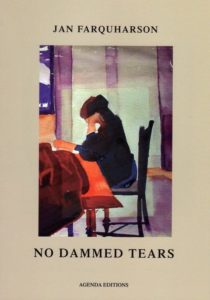
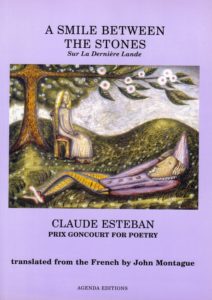
A Smile Between The Stones – John Montague
Translations from Sur La Dernière Lande by Claude Esteban, who gained the first Prix Goncourt ever for poetry (usually awarded for prose).
Kurdish Poems of Love and Liberty – Desmond O’Grady

The Domino Hymn, Poems from Harefield – Grey Gowrie
Dark Hill Dreams – Steven O’Brien

A first collection from this Irish/first Generation British poet.
Losers Keepers – Andrew McNeillie

The Untenanted Room – Poems by James Simpson, woodcuts by Carolyn Trant
